U.S. Water and Wastewater Infrastructure News & Events Briefing — September 17, 2026
Thursday, September 17, 2026
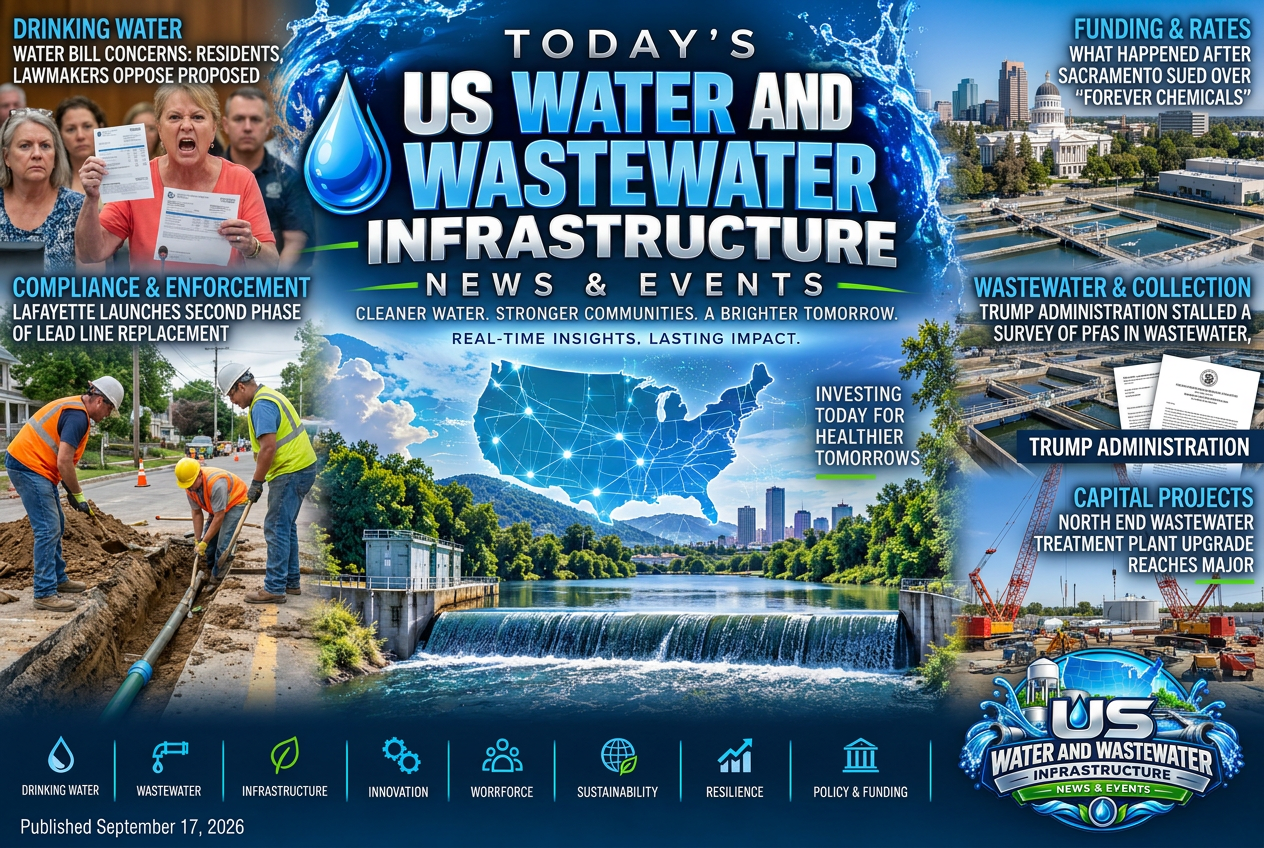
Today's briefing brings you 5 stories across drinking water and wastewater & collection from the utilities, authorities and state agencies that run American water. Leading today: Water bill concerns: Residents, lawmakers oppose proposed Illinois American Water rate increase at Bolingbrook, Illinois hearing - ABC7 Chicago.
drinking-water
The story covers a proposed drinking-water rate increase for Illinois American Water and the public and political pushback it drew at a local hearing. For similar utilities, the issue is how rate cases affect customer bills, affordability arguments, and regulatory approval of revenue changes.
Rates & affordability
Lafayette is starting a second phase of lead service line replacement, which puts this squarely in drinking-water compliance and capital work. For other utilities facing lead rules or replacement deadlines, it signals continued pipe-by-pipe inventory and replacement work and the need to coordinate homeowner access or participation; the excerpt does not say how many lines are involved, what the schedule is, or how the work is funded.
Lead service lines
Sacramento’s lawsuit over PFAS in groundwater points to drinking-water compliance and the costs of dealing with contaminated source water. For other systems facing the same chemicals rule, this kind of case can shape who pays for investigation, treatment, or cleanup, but the excerpt does not say what remedy the court or settlement produced.
PFAS & contaminants
wastewater
The piece says a federal survey of PFAS in wastewater was delayed, which matters for wastewater systems trying to understand their contaminant profile and prepare for compliance work. The excerpt does not say which utilities were surveyed, what the survey would have measured in detail, or whether any specific permit, enforcement step, or treatment requirement changed.
PFAS & contaminants
The piece is about a wastewater treatment plant upgrade reaching a construction milestone. It matters to the utility because it signals progress on a facility project, but the excerpt does not say what work was completed or whether the upgrade changes compliance, capacity, or costs.
Treatment plant projects